
The higher you rise, the easier it is to lose yourself. Here is how to find your way back.
Most leaders can tell you exactly what they do.
Their title. Their track record. The scope of what they oversee. The results they have delivered and the organization they have helped shape.
Far fewer can tell you who they are when no one is watching. When no one is rating or approving or confirming that they belong.
For many of us, identity in leadership is built from the outside in. It is shaped by the promotion that told us we were finally good enough. The board that applauded the numbers. The culture that rewarded a particular kind of confidence and presence. And slowly, without quite noticing, the question shifts.
It moves from what do I believe to what will be accepted.
This is how conformity works. It rarely announces itself. It looks like professionalism. It looks like ambition and strategic thinking and being a team player. But an identity built on external validation needs constant upkeep. And that upkeep is expensive in ways most leaders never fully name.
This edition is about naming it.
What it costs at the top
The higher you rise, the more audiences you serve. Boards, investors, peers, direct reports, the market. Each one holds an expectation, and a borrowed identity quietly tries to satisfy them all.
It shows up in ways that look nothing like failure. In agreeing to a strategy you privately doubt because dissent feels too risky. In tailoring your opinion to the room before you have fully formed it yourself. In over-preparing so you are never caught without the answer. In measuring your day by how you were perceived rather than what you actually moved forward. In performing certainty when the most honest thing you could say is I do not know yet.
None of these look like a problem from the outside. Many of them look like excellence.
But each one diverts energy from leading to managing perception. Decisions slow. Fatigue builds. Teams notice, and they learn to perform too. And a culture of performance quietly replaces a culture of authenticity.
You cannot lead others toward clarity while running on approval.
The imposter we all carry
We all have an imposter. The voice that drives our reactions, our fears, the limiting beliefs we mistake for facts.
It is not a villain. It is a protector with an outdated job description. Belonging once meant survival, so we learned early to read the room and adjust. As children, many of us were praised for performance rather than presence. As professionals, we were promoted for meeting expectations, often other people’s. The imposter keeps that strategy running long after we need it.
You can hear it in the familiar lines. If I slow down I will fall behind. If they see my doubt they will lose confidence in me. I have to earn my seat at this table, again.
When the imposter leads, we start conforming. We compromise our own needs, our own desires, our own values. We drift away from who we actually are, what we honestly think, and what we genuinely want. That drift is misalignment. And it compounds quietly over time.
Recognizing when you have drifted
The first signal is resistance. A tightness before a meeting you used to welcome. A flatness where there used to be energy. Fear, anxiety, or a low-grade urgency that does not quite feel like your own.
Resistance is information, not weakness. The useful question is not whether you feel uncomfortable. It is whether you are stretching toward who you are, or contorting into who you think you should be.
When the source is external validation, the signs tend to look like this.
Constant effort. Everything feels uphill, even the work you are genuinely good at. Feeling pressured by an urgency that does not feel like yours. Reacting to a crisis in a way that is more about being seen handling it than simply handling it. A calendar, choices, and voice that no longer feel fully like your own. Labeling yourself in ways that have become a cage. I am the fixer. I am the one who never drops the ball. Saying yes to secure approval rather than to create real value. Over-explaining decisions that only needed to be stated. Watching yourself perform instead of simply being present. Needing your momentum to be visible to feel real.
One or two of these on a hard week is human. A pattern is a message.
Alignment starts with what you actually value
Alignment is not about becoming a louder version of yourself. It is about becoming a clearer one. The goal is not to become more. It is to stop what no longer serves you and to set down what keeps you from moving forward.
Your core values are the reference point. Not the ones printed on the office wall. The ones you would keep even if no one rewarded them. The best test is simple. Which values have you honored when it cost you something?
When your leadership, your thoughts, your emotions, and your actions line up with those values, something shifts.
The internal debate quiets. You are no longer running two scripts at once, what you actually think and what you believe will be accepted. Energy is released. The effort once spent monitoring your image becomes available for the work itself. Emotions become information rather than commands. Fear still shows up, but it advises rather than decides. Thinking sharpens. Decisions get faster because the filter is finally clear.
The result is not dramatic. It is clarity. And with it, a return of something that looks a lot like passion. Not the adrenaline of proving yourself. The steady energy of doing what actually matters to you.
Where to begin
Alignment is built in small, deliberate moves.
Name your core values honestly. Choose three to five. Define each one as a behavior, not a word. Integrity becomes I say the hard thing early. Presence becomes I put the phone down when someone is talking to me. The more specific, the more useful.
Treat resistance as a pause button. When you feel the tightness before a decision or a conversation, ask one question. Am I seeking approval right now?
Audit your yes. Look at last week’s calendar. Mark each commitment as aligned or approval-driven. Notice the ratio honestly.
State decisions once. Share your reasoning, then stop. Explanation informs. Over-explanation seeks permission.
Release one thing. A habit, a label, a commitment that no longer fits. Subtraction often creates more momentum than addition ever will.
Reflect weekly. Where did I lead from alignment this week? Where did I lead from approval? What did each one cost me?
Find a truth-teller. A coach, a peer, an advisor who reflects back what they actually see rather than what you want to hear. This is not a luxury. It is infrastructure.
The subtle signs you are aligning
You will notice the difference before you can fully name it.
You stop reacting to everything. Situations that used to hook you no longer do. You see them more clearly, respond only when it matters, and move on without replaying them. This is discernment.
Your standards shift without effort. You stop negotiating with yourself about the things that drain you. The boundary simply holds.
Your relationship with effort changes. Action feels cleaner. Less internal resistance before you start, less exhaustion when you finish. Work that once felt heavy becomes quietly satisfying.
You talk less about your plans. They no longer need outside reinforcement to feel real.
The impulse to explain yourself fades. Your decisions stand on their own.
These shifts are small. But they compound. They free you. They change how you lead and who follows you and what becomes possible in every room you walk into.
A closing thought.
This is not easy work. It requires intention and honesty and a willingness to see the gap between who you are performing and who you actually are.
You will slip back into conformity. Everyone does. The goal is not perfection. It is noticing sooner and returning faster.
The leaders people trust most are rarely the loudest in the room. They are the clearest. They know what they value, act from it, and let the approval follow, or not.
A few questions to sit with this week.
Where in my leadership am I performing rather than leading?
What would I stop doing if no one were watching?
Which value have I been quietly negotiating away?
Your answers belong to you. But we would love to hear them.
“To be yourself in a world that is constantly trying to make you something else is the greatest accomplishment.”

Resources to Dive Deeper
Emotional Agility — Susan David: David’s research on navigating difficult thoughts and emotions without being hijacked by them is one of the most practical guides available for the kind of internal work this edition is calling for.
The Gifts of Imperfection — Brene Brown: Brown’s most personal book on what it actually means to let go of who you think you should be — one of the most honest explorations of identity, belonging, and what it costs us to keep performing.
Mindset — Carol Dweck: The story we tell ourselves about who we are shapes every decision we make about how we lead. Dweck’s foundational research on fixed versus growth mindset is the most important read on identity available for leaders at any level.
Free Core Values Assessment
The work of becoming clear starts with knowing what you actually value.
We created a free Core Values Assessment specifically for leaders who are ready to stop leading from approval and start leading from alignment. It takes about ten minutes and gives you a clear, honest picture of the values that are already operating in you — the ones you would keep even if no one rewarded them.
It is the most important ten minutes you can invest in yourself as a leader right now.

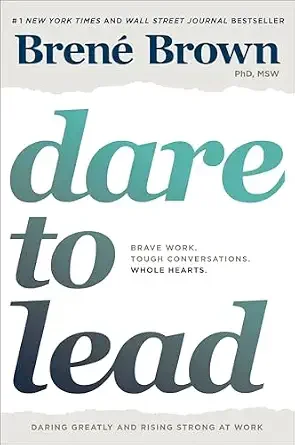
Dare to Lead by Brene Brown
This edition and this book are asking the same question from two different directions. Brown’s research on courage, vulnerability, and values-based leadership is the most rigorous and honest exploration available of what happens when leaders stop performing and start showing up as who they actually are.
She gives you the language for what alignment feels like in practice, the framework for building the kind of trust that only comes from genuine presence, and the honest challenge to do the work rather than manage the appearance of doing it. If this edition landed for you, this is the book to sit with next.

Consider how many different pieces of content you see in any given week. See something that resonates with you? Share it with us to feature it in our Social Media of the Week section.
“The most common form of despair is not being who you are.”
Soren Kierkegaard