
Back to Basics, or the foundations every leader needs and more, never revisit.
Great leadership isn't complicated. But it does require going back to the fundamentals — again and again.
Back to basics. Back to what matters.
There is a moment that nearly every new leader experiences. The title changes, the responsibility expands, and suddenly you find yourself standing in front of a team wondering — what do I actually do now? The technical skills that got you here feel suddenly insufficient. The playbook you relied on as an individual contributor no longer quite fits. And nobody hands you a manual.
And there is a different moment that happens to nearly every senior leader. Somewhere between the strategy sessions, the stakeholder management, and the years of experience, the fundamentals quietly slip. Not all at once. Gradually. A little less listening here. A little more telling than asking there. Accountability conversations that get softer because the relationship got more comfortable. Trust that gets assumed instead of earned.
Both moments are more common than anyone admits. And both point to the same truth.
The foundations of leadership are not a beginner's topic. They are a lifelong practice.
The leaders who consistently show up well — the ones people remember, follow, and grow under — are not the ones who mastered the basics once and moved on. They are the ones who keep coming back to them. Those who treat self-awareness not as a checkbox but as a daily discipline. Who understands that trust is not a given, it is a choice made over and over in small moments. Who knows how they communicate, how they hold people accountable, and how they make decisions either builds their credibility or quietly erodes it.
This edition is for the leader just starting out, trying to find solid ground. And it is equally for the leader with decades of experience who knows — if they are honest — that there are a few fundamentals they have let slide.
Because great leadership is not complicated. But it does require going back to the foundation. Again and again.
Let's do that together.
THE FOUNDATIONS — AND WHAT THEY ACTUALLY LOOK LIKE IN PRACTICE
FOUNDATION 1: SELF-AWARENESS
Know who you are before you try to lead others.
Self-awareness is the starting point of everything. It is the difference between a leader who grows and one who repeats the same patterns for twenty years and calls it experience. It means understanding your values — what you will and will not compromise on. It means knowing how you show up under pressure, how others experience you, and where your blind spots are. It means being honest about the gap between the leader you believe yourself to be and the leader your team actually sees.
For new leaders, this is foundational work. Before you can build credibility with others, you have to understand yourself. What do you stand for? What kind of leader do you want to be? How do you want people to feel after a conversation with you?
For senior leaders, this is maintenance work. Self-awareness erodes quietly. We stop asking for feedback because we assume we know. We stop reflecting because we are too busy delivering. And slowly, without noticing, we drift from the values and intentions that once defined our leadership.
Try this: Write down three words that describe the leader you want to be. Then ask two or three people who work closely with you to describe how you actually show up. The gap between those two answers is your development plan.
FOUNDATION 2: VALUES-BASED LEADERSHIP
What you do when no one is watching is who you are as a leader.
Values are not a mission statement. They are not something you post on a wall or include in an onboarding deck. Values are what drive your decisions when the pressure is on, when there is something to lose, and when no one is there to hold you accountable but yourself.
For new leaders, values-based leadership means getting clear early. What do you believe about people? About accountability? About the kind of culture you want to build? Getting clear on this before you are under pressure means you will have an anchor when pressure comes. And it will come.
For senior leaders, values-based leadership is about consistency. People are watching whether what you say and what you do are the same thing. Every time they align, trust deepens. Every time they diverge — even slightly — credibility takes a quiet hit. Your team may never say it out loud. But they notice.
Try this: Think about a recent decision you made under pressure. Was it aligned with the values you say you lead by? If yes, name why. If not, name that too. Both answers are useful.
FOUNDATION 3: EMOTIONAL INTELLIGENCE
The best leaders feel the room — and manage themselves first.
Emotional intelligence is not about being soft. It is about being effective. It is the ability to understand your own emotions well enough that they do not drive your decisions, and to understand others' emotions well enough to lead them through difficulty, change, and challenge.
It shows up in whether you stay regulated in a tense conversation or let your frustration take over. Whether you can read what is really going on with a struggling team member, or just see the performance gap. Whether you can deliver hard feedback with care, or whether you avoid it entirely because the discomfort is too much.
For new leaders, this is often the steepest learning curve. The transition into leadership brings a new level of emotional complexity — navigating relationships with former peers, holding people accountable for the first time, managing up and across while leading down. Emotional intelligence is what makes all of it workable.
For senior leaders, this is about staying sharp. The longer we lead, the easier it gets to operate on autopilot — to assume we know what our team is feeling, to miss the undercurrent in a room because we are focused on the agenda. The best senior leaders stay curious about the people they lead, not just the work those people produce.
Try this: In your next one-on-one, spend the first five minutes asking nothing about work. Ask how the person is doing and actually listen. Notice what you learn that you would not have known otherwise.
FOUNDATION 4: COMMUNICATION
What you say matters. How you say it matters more.
Communication is the most visible expression of leadership. Every email, every conversation, every meeting, every piece of feedback — all of it is data your team uses to determine whether you are safe to follow, honest to trust, and clear enough to execute behind.
The fundamentals of great leadership communication are not complicated. Be clear. Be consistent. Be honest. Listen more than you speak. Say what you mean and mean what you say. Give feedback early and often rather than letting things build. And when you do not know something, say so — nothing builds more trust than a leader who is willing to be honest about uncertainty.
For new leaders, communication is where credibility is built or lost fastest. Your team is watching how you handle hard conversations, whether your words match your actions, and whether you create a space where people feel heard. Get this right early, and everything else is easier.
For senior leaders, the most common drift is from dialogue to declaration. We talk more and listen less. We walk into rooms with the answer already formed and use the conversation to confirm rather than explore. We give feedback less frequently because the relationships feel established. All of it quietly costs us.
Try this: Track the ratio of talking to listening in your next three meetings. Aim for listening sixty percent of the time. See what you learn when you create more space than you fill.
FOUNDATION 5: TRUST
Trust is built in small moments, lost in small moments, and almost impossible to rebuild once it is gone.
Trust is the currency of leadership. Without it, nothing else works. People will comply without trust, but they will not commit. They will execute without trust, but they will not bring their best thinking. They will stay in the job without trust, but they will leave the moment something better appears.
Trust is built through consistency, honesty, follow-through, and the willingness to show up for people even when it is inconvenient. It is built when you do what you say you will do. When you tell the truth, even when it is uncomfortable. When you advocate for your team publicly and give honest feedback privately. When you protect your people when they need protecting and hold them accountable when that is what the moment requires.
For new leaders, trust is your first and most important project. Before strategy, before vision, before any of the leadership work that comes after — you have to build the foundation of trust that makes all of it possible.
For senior leaders, trust is something to audit regularly. Have you kept your commitments? Have you been as honest as you could have been? Are there relationships on your team where trust has eroded quietly, and you have avoided addressing it? Trust does not maintain itself. It requires attention.
Try this: Think about one person on your team or a peer you work closely with. On a scale of one to ten, how strong is the trust between you? What is one thing you could do this week to move that number up by one point?
FOUNDATION 6: ACCOUNTABILITY
Accountability is not about consequences. It is about care.
This is one of the most misunderstood foundations in leadership. Many leaders think accountability means enforcement — catching people when they fall short and making sure there are consequences. And while consequences matter, that framing misses the deeper truth.
Real accountability is an act of respect. It says: I believe you are capable of more, and I care enough about your growth to hold you to it. It is the leader who has the honest conversation early, before the problem compounds. Who names what they are seeing without blame. Who sets clear expectations and then follows up not to catch people out, but to support them in succeeding.
For new leaders, accountability is often the hardest foundation to build. It requires having conversations that feel uncomfortable, especially with people who were recently peers. But avoiding those conversations does not make them disappear. It just makes them harder.
For senior leaders, the drift here is almost always toward softness. Standards quietly lower. Expectations become suggestions. The hard conversation gets postponed because the relationship feels too important to risk. But the relationship is exactly what suffers when accountability disappears.
Try this: Is there a conversation about performance or expectations you have been putting off? Commit to having it this week. Be clear, be kind, and be direct. All three at once is possible — and it is what great leaders do.
FOUNDATION 7: DECISION-MAKING
A leader who cannot decide cannot lead.
Decision-making is one of the most practical and most overlooked foundations of leadership. Every day, we are called on to make decisions with incomplete information, under time pressure, and with real consequences for real people. How we approach those decisions — and how we communicate them — is one of the clearest signals of our leadership maturity.
Great decision-making is not about always being right. It is about being thoughtful, transparent, and willing to be accountable for the outcome, either way. It means knowing when to make quick decisions and when to slow down. When to involve others and when the moment calls for clarity and direction. When to change course and when to stay the line.
For new leaders, decision-making can feel paralyzing. The fear of getting it wrong, of disappointing people, of not having enough information is real. The antidote is not more certainty — it rarely comes. It is learning to make the best decision available with what you have, communicate it clearly, and stay present to what the outcome teaches you.
For senior leaders, the drift here is often toward over-consulting or under-explaining. Either we involve too many people in decisions that do not require consensus, or we make decisions without involving our teams. Both create confusion and erode trust.
Try this: The next time you face a decision you have been avoiding, write down the information you actually have, the options available, and the values that should guide the choice. Most of the time, the answer is already there. What has been missing is the willingness to commit to it.
A closing thought for every leader.
Whether you are one month into your first leadership role or twenty years into your career, the foundations never stop mattering. They are not something you graduate from. They are something you return to — with more experience, more nuance, and more honesty about where you have grown and where you still have work to do.
The leaders who leave the greatest impact are not the ones who learned the fundamentals once. They are the ones who never stopped practicing them.
That is the standard. And it is available to all of us.
“The quality of a leader is reflected in the standards they set for themselves.”

Resources to Dive Deeper
The Leadership Challenge — James Kouzes and Barry Posner
The most research-backed exploration of what exemplary leaders actually do — built around five timeless practices that hold true at every level and every stage of a leadership career.Emotional Intelligence — Daniel Goleman
The book that made EQ a leadership conversation. Goleman's framework for understanding and developing emotional intelligence remains one of the most important reads for any leader serious about their impact on others.Radical Candor — Kim Scott
Scott's practical framework for giving honest feedback with genuine care — the best guide we have found for leaders who want to have harder conversations without damaging the relationships that matter.
FROM OUR DESK
The best leaders reflect before they react. The Leader Is You: A Daily Growth Journal gives you a space to do exactly that to slow down, ask the hard questions, and show up more intentionally every day. Whether you are working through a shift like the one in this edition or simply trying to lead with more clarity and purpose, this journal travels with you and meets you where you are.

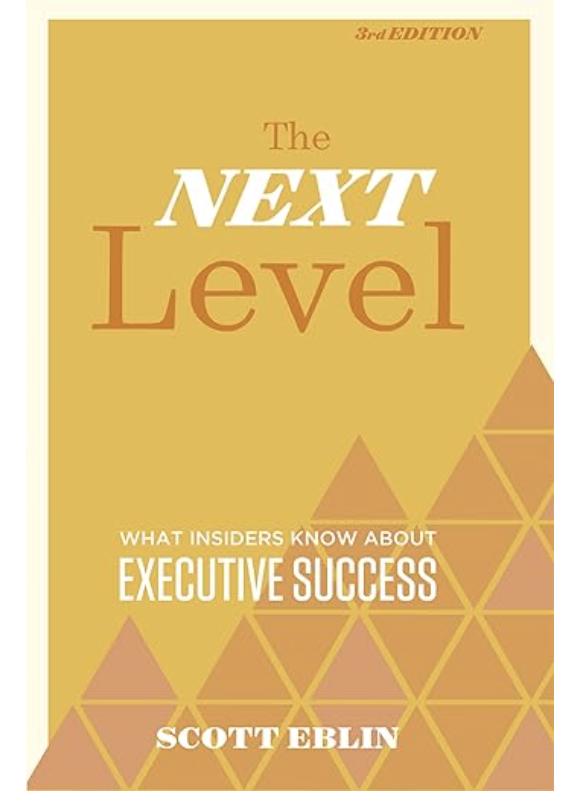
The Next Level by Scott Eblin
This one hits close to home.
Eblin’s research-backed framework names exactly what we need to pick up and what we need to let go of as we move into more senior roles. If we’ve ever felt like we were doing everything right but still not advancing, this book explains why.
Practical, honest, and one of the clearest maps we’ve found for the mindset shifts that actually move the needle.
👉 Get the book here

Consider how many different pieces of content you see in any given week. See something that resonates with you? Share it with us to feature it in our Social Media of the Week section.
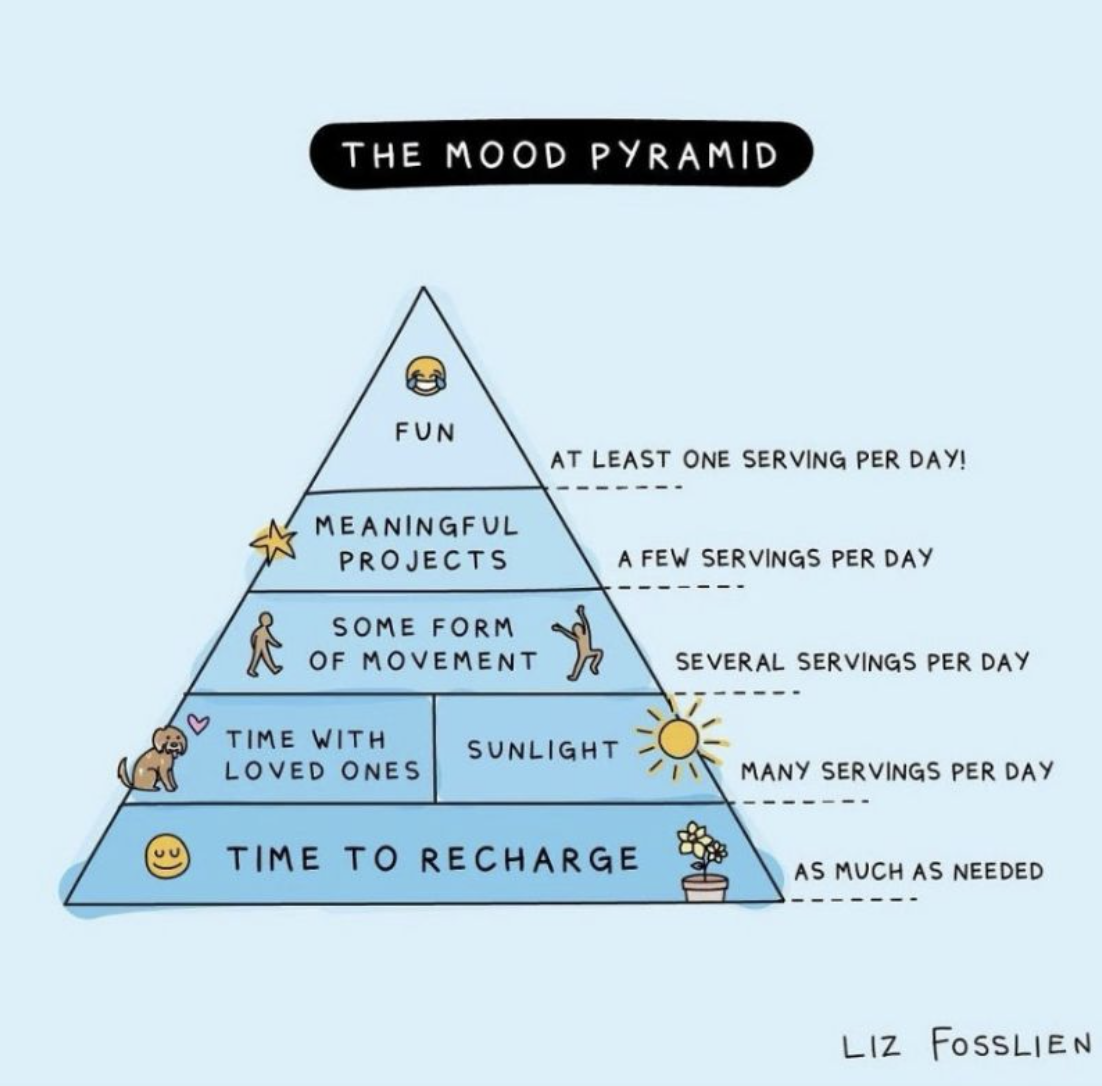
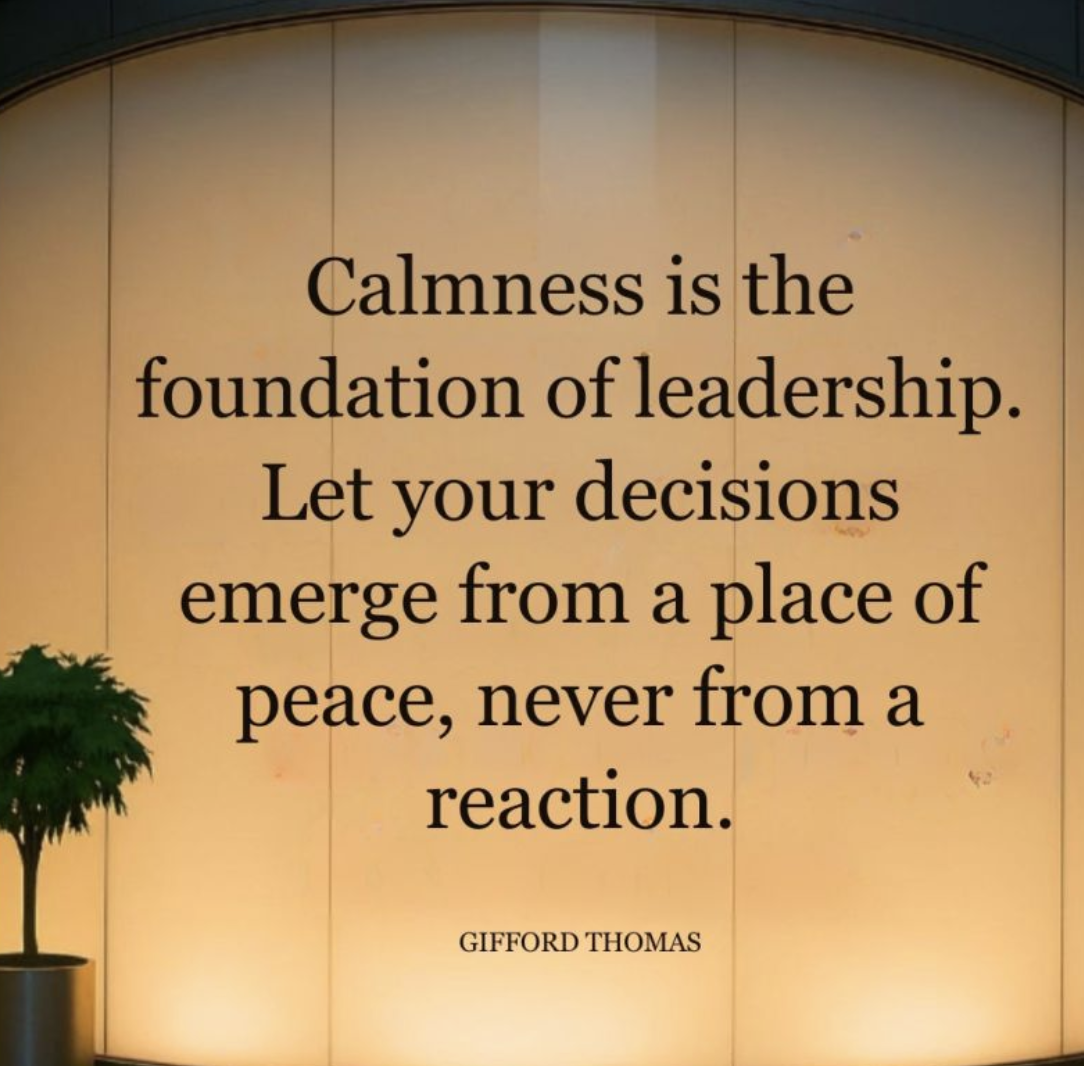
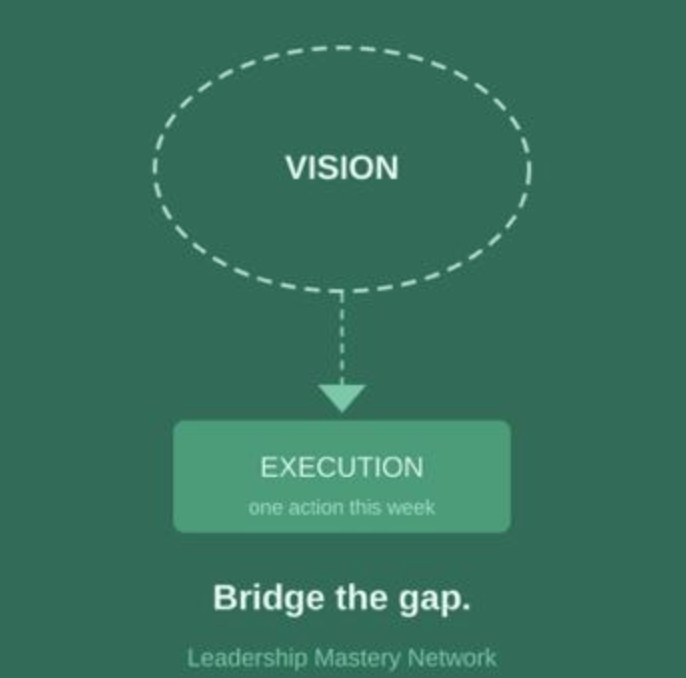
"You manage things. You lead people."
— Grace Hopper