
The Leadership Legacy Test
Would Your Team Survive Without You?
This week, the news moved fast, and for leaders, it moved close to home.
April closed with a wave of CEO transitions that reads like a succession case study: Tim Cook, Doug McMillon, Bob Iger. Thousands of layoffs at Oracle, Cloudflare, Block, and Coinbase all explicitly attributed to AI restructuring. A new data point showing 43% of US CEOs name uncertainty as their top threat. And a growing body of research confirming what most executive coaches already know: the skills AI cannot replicate are becoming the ones organizations need most.
This issue goes back to the foundations of the things that remain true no matter how fast the landscape shifts. We hope it gives you something worth sitting with.
What Leaders are talking about this week
Here's what's dominating leadership conversations, boardrooms, and coaching sessions right now and why each one matters.
THE GREAT CEO RECKONING
2026 is the most active year for CEO transitions in decades Cook at Apple, McMillon at Walmart, Iger at Disney. The common thread: leaders stepping aside to make room for AI-era specialists. The question every board is now asking: do we have the right leader for what comes next?AI-DRIVEN LAYOFFS: LEADING THROUGH THE CUT
Cloudflare, Block, Coinbase, Oracle, and others have cut tens of thousands of jobs, explicitly attributing reductions to AI. Leaders are navigating survivor guilt, morale erosion, and the ethics of how cuts are communicated Oracle's 6am email from "Oracle Leadership" sparked a firestorm about what not to do.THE TRUST DEFICIT IS GETTING WORSE
New research shows 85% of employers believe they understand what their teams want. Most employees say they're wrong. Only 1 in 10 workers believe their feedback leads to action. The listening-to-action gap is eroding culture faster than most leaders realize.FRONTLINE MANAGER BURNOUT: A SYSTEM PROBLEM
Manager engagement hit a rare dip in 2025 — dropping from 30% to 27%, with female managers down 7 points and managers under 35 down 5. These are the people carrying strategy into execution every day, and they are running on empty.FOBO: THE FRONTLINE AI ANXIETY LEADERS ARE MISSING
Frontline leaders are 3x more worried about AI than executives. That readiness divide is silently stalling transformation at the exact layer where adoption matters most. Senior leaders who aren't aware of this gap are building on sand.VALUES-BASED LEADERSHIP IS HAVING A MOMENT
A significant shift is underway: organizations are investing in leadership development that starts with who leaders are, not just what they do. Research shows values-clarity leads to more consistent decisions under pressure exactly what 2026 demands.THE RETURN TO FUNDAMENTALS
In volatile environments, fundamentals get louder. Clear priorities. Simple decision rules. Strong values. Consistent accountability. The organizations pulling ahead aren't chasing every new tool — they're anchoring on timeless principles while adapting at the edges.SUCCESSION PLANNING AS A LEADERSHIP DISCIPLINE
Apple's Ternus transition, framed as "long-planned," highlights what separates good leaders from great ones. Building your successor isn't an exit strategy. It's a core leadership responsibility. Most leaders are dangerously behind on this.THE EMPATHY BACKLASH — AND WHY IT'S WRONG
In a push for accountability, 59% of executives now view empathy as a "nice to have." Research says they're making a mistake. Empathy-led leaders outperform on retention, trust, and team execution. Empathy isn't soft. It's structural.ECONOMIC UNCERTAINTY AS A LEADERSHIP STRESS TEST
43% of US CEOs cite uncertainty as their #1 threat. Tariff volatility, policy shifts, and AI disruption have made scenario planning, transparent communication, and steady presence the defining leadership competencies of the moment.
THIS ISSUE'S DEEP DIVE
THE SUCCESSION IMPERATIVE: WHY GREAT LEADERS BUILD THEIR REPLACEMENT
Inspired by the wave of CEO transitions reshaping Corporate America in 2026.
THE MOMENT
2026 has become the most seismic year for CEO transitions in modern corporate history. Tim Cook. Bob Iger. Doug McMillon. Greg Abel is stepping into Buffett's shoes at Berkshire. Adobe, Coca-Cola, BP, Dow. The common theme isn't failure, it's a deliberate recognition that the AI era requires a different kind of leader at the helm.
WHY THIS MATTERS BEYOND APPLE
When Fortune called it "a CEO reckoning sweeping Corporate America," they weren't being dramatic. The speed of AI transformation has created a genuine question that boards are finally willing to ask out loud: is the leader who built this organization the right leader to transform it?
What's striking is how many departing CEOs are saying the same thing. Walmart's McMillon cited the urgency of AI transformation as a factor in stepping back. Coca-Cola's Quincey said essentially
the same. These aren't leaders being pushed out. They're leaders with the self-awareness to recognize when someone else should carry the torch.
That level of clarity, about self, about timing, about organizational need, is precisely what succession planning develops in leaders at every level.
THE SUCCESSION BLIND SPOT
In 25+ years of executive coaching, the most common leadership blind spot I see isn't strategy or execution. It's this: leaders who are deeply focused on delivering results today, while leaving their organizations dangerously dependent on them.
Succession isn't a retirement planning exercise. It's one of the most consequential leadership responsibilities you have, and it starts on the first day of any leadership role, not the last.
The question is never "Who takes over when I leave?"
The question is: "Am I making the people around me better, more capable, and more ready, every single week?"
THE HARD TRUTH
If your team can't function at full capacity without you in the room, you haven't led — you've created dependency. The most dangerous leader isn't the one who leaves. It's the one who never prepared anyone to take their place.
WHAT SUCCESSION-READY LEADERS DO DIFFERENTLY
They delegate authority, not just tasks. They give people real ownership, with the context, trust, and autonomy that make it meaningful.
They invest in others' growth explicitly. Not as a sidebar to their own work, but as a defined leadership priority with time and attention behind it.
They name potential successors early and have the uncomfortable conversations that accelerate development.
They celebrate when their people outgrow their roles. They see it as success, not loss.
They build their own obsolescence, deliberately making themselves less indispensable over time, not more.
ACTIONS YOU CAN TAKE THIS WEEK
DAY 1: AUDIT YOUR DEPENDENCIES
List every decision, project, or process that requires your direct involvement. Identify one you can fully hand off this week with context, authority, and trust.DAY 2: NAME YOUR SUCCESSOR
If you had to name someone on your team who could grow into your role in 18–24 months, who would it be? Write their name down. Have you told them? Have you started investing in that gap?DAY 3: SCHEDULE A DEVELOPMENT CONVERSATION
Not a performance review. Not a check-in. A forward-looking conversation with a high-potential team member about where they want to go and what you can do to help them get there.THIS MONTH: BUILD IT INTO YOUR CALENDAR
Block 30 minutes per week to explicitly develop the people around you. Not mentoring. Not feedback. Active, intentional investment in their next level.
“A leader’s lasting value is measured by succession.”

Resources to Dive Deeper
Tim Cook's Exit Is Part of a CEO Reckoning Sweeping Corporate America: Fortune's sharp analysis of the 2026 succession wave, and why transformation, not turnaround, is driving it.
AI Layoffs: Why Mass Cuts Won't Transform Your Company: A firsthand account from an executive displaced by AI who now deploys it, the difference between shrinking to efficiency and truly reinventing.
Skills, Trust and 2026: Fixing the Employer–Worker Divide: Indeed's research on the widening gap between what employers think they know and what workers actually experience — with actionable fixes.
The Rise of Values-Based Leadership: How organizations are shifting toward inside-out leadership development — connecting personal values to decision-making and organizational culture.
Genius at Scale: How Great Leaders Drive Innovation by Linda Hill, Emily Tedards, and Jason Wild: How exceptional leaders build the social fabric for innovation — especially relevant as organizations restructure around AI.
Range: Why Generalists Triumph in a Specialized World by David Epstein: One of the most consistently recommended books by senior executives this year — why breadth beats deep specialization in complex, changing environments.
FROM OUR DESK
The best leaders reflect before they react. The Leader Is You: A Daily Growth Journal gives you a space to do exactly that to slow down, ask the hard questions, and show up more intentionally every day. Whether you are working through a shift like the one in this edition or simply trying to lead with more clarity and purpose, this journal travels with you and meets you where you are.
—————————
And if you're ready to go deeper than a journal can take you — the Leadership Mastermind is for you.
This is a small, curated group of leaders committed to growing together. Bi-weekly live sessions. Executive coaching. Real conversations about the challenges you're actually facing — succession, trust, AI, burnout, all of it. No fluff. No audience. Just a room of serious leaders doing serious work.
Doors are currently closed, but the waitlist is open.
If leading with purpose, power, and presence is the standard you're holding yourself to in 2026 — this is where that work gets done.
Spots are limited. The leaders already on the list won't wait for you.

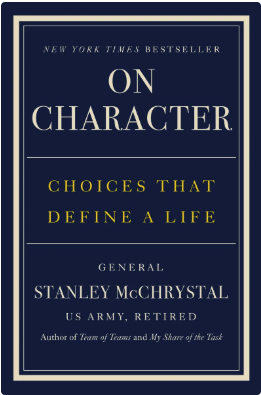
On Charater by General Stanley McChrystal
"In the AI age where competence can be automated, character is the last distinct human advantage."
McChrystal's central argument is both simple and demanding: character is not a fixed trait, it's a daily practice. A muscle. A set of choices made under pressure, repeatedly, over time.
In a moment when competence is increasingly automatable, and AI can generate strategy, write analysis, and model decisions, McChrystal asks: what's left that's distinctly human in leadership? His answer is that character is the moral fiber that shapes how leaders behave when no one is watching, when the answer isn't clear, and when the pressure is high.
Drawing on decades of military command and executive consulting, he breaks character down into actionable choices—not aspirational qualities. This isn't a book about being a good person. It's a book about the daily decisions that constitute who you are as a leader.
Best for: Leaders navigating high-stakes change who want to lead from the inside out. Especially timely as AI redefines what "competence" means.

Consider how many different pieces of content you see in any given week. See something that resonates with you? Share it with us to feature it in our Social Media of the Week section.
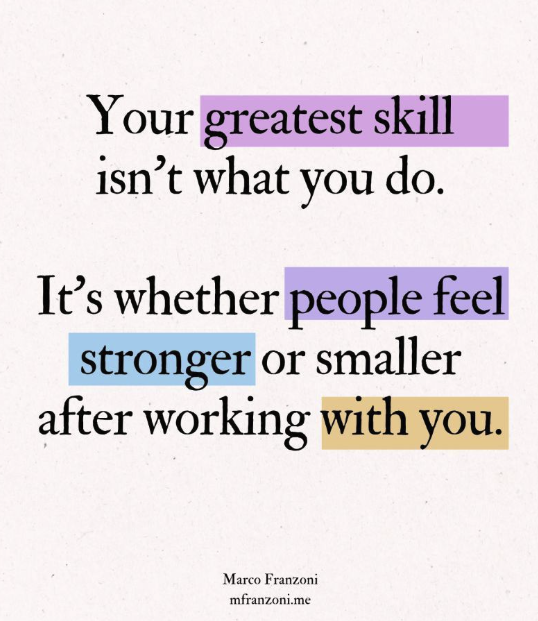
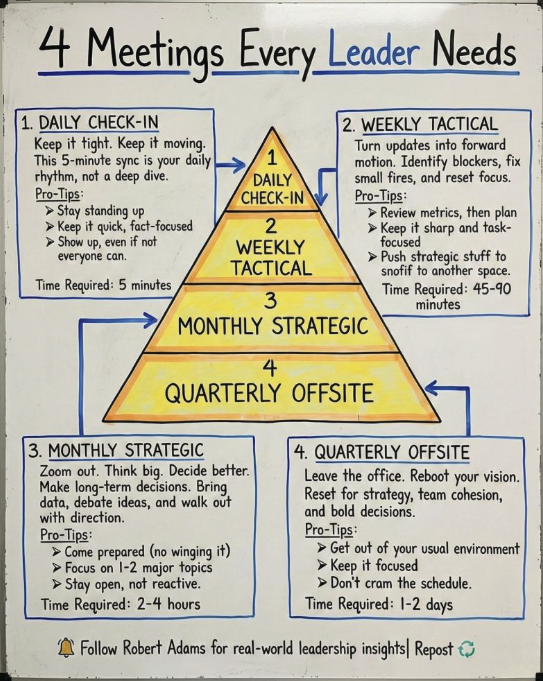
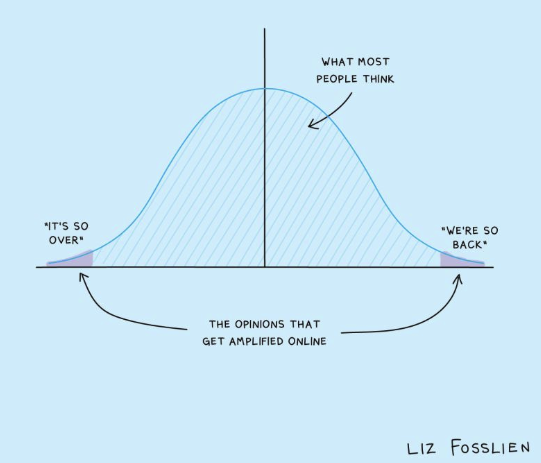
"The leaders who win long-term aren't always the smartest. They're the ones who keep developing the people around them."
-Leadership Mastery Network