
Reset is not a reward for when the work slows down. It is what makes the work possible.
Let's be honest about something most leaders will not say out loud.
We are tired.
Not the kind of tired that a good night's sleep fixes. The kind that has been building for months. The kind that shows up as a shorter fuse in a meeting that would not have bothered you a year ago. As decisions that feel harder than they should. As a version of yourself that is present in the room but not quite there in the way you used to be.
Most leaders recognize this feeling and push through it. Because that is what we were taught. Because there is always something more urgent than our own recovery. Because rest feels like something we earn when the work slows down, and the work never really slows down.
But here is what the research is unambiguous about. The capacity to lead well, to think clearly, to regulate under pressure, to be genuinely present for the people who need you, is a finite resource. It depletes. And unlike most leadership challenges, the solution is not more effort. It is intentional recovery.
The leaders who sustain their impact over time are not the ones who rest when they have to. They are the ones who have built recovery into how they lead as a non-negotiable practice. Not as a reward for getting through the quarter. As the foundation that makes the quarter possible.
This edition is about how to actually do that. Not the aspirational version. The practical one that fits into a real leadership life with real demands and no extra hours in the day.
Why reset matters more than ever right now
We are leading in one of the most demanding environments most of us have ever experienced. AI disruption, economic uncertainty, organizational change, and the relentless pressure to deliver results are not abstract forces. They are landing in the bodies and minds of real leaders every single day.
The result is visible in the data. 71 percent of leaders are reporting increased stress. Burnout is sitting at 83 percent. Manager engagement is falling. And the leaders who are struggling most are not the ones who care least. They are often the ones who care the most and have been running on that care without replenishing it.
Chronic depletion does not just affect how leaders feel. It affects how they lead. Decision quality drops. Emotional regulation suffers. Creativity narrows. The capacity for genuine empathy, one of the most critical leadership capabilities in an uncertain environment, requires neurological resources that are simply not available when the system is running on empty.
Reset is not self-indulgence. It is a performance strategy. And right now it is one of the most underutilized ones available.
What reset actually looks like
Before the practical tips, a reframe that matters.
Most leaders think of rest as the absence of work. A vacation. A weekend. A night where you manage to close the laptop before midnight. That is recovery, but it is the passive version. Intentional reset is something different. It is an active, deliberate practice of restoration that you build into the structure of your leadership life, not something you fall into when you have run out of options.
It happens at four levels.
Physical. Your body is the hardware that runs everything else. Sleep, movement, and nutrition are not wellness topics. They are leadership performance tools. A leader who is chronically sleep-deprived is operating with the cognitive equivalent of a blood alcohol level that would be illegal to drive with. That is not a metaphor. That is the neuroscience.
Mental. Your mind needs white space the way a muscle needs rest between sets. Without it the quality of your thinking degrades, not dramatically, but consistently and in ways that compound over time. Mental reset means protecting time where you are not consuming information, solving problems, or producing output. Just thinking, or not thinking at all.
Emotional. Leaders carry more than their own emotional load. They absorb the anxiety, uncertainty, and stress of their teams, their stakeholders, and their organizations. Without a deliberate practice of emotional release and restoration, that accumulated weight starts showing up in how you respond to the people who need your best. Emotional reset is how you empty the cup so it can be filled again.
Relational. The isolation of leadership is real and underestimated. The relationships that restore leaders, not the strategic ones, the genuine ones, are often the first to get deprioritized when things get busy. Reconnecting with people who know you outside of your title and your performance is one of the most powerful forms of reset available.
Practical actions and tips leaders can take now
Protect sleep like the leadership priority it is. This is not negotiable and it is where most leaders compromise first. Research is unambiguous. Seven to nine hours of sleep is not a luxury. It is the foundation of cognitive function, emotional regulation, and decision quality. Every hour of chronic undersleep compounds. The leader who consistently gets six hours believes they are functioning fine. The data says otherwise.
Try this: For the next two weeks commit to a consistent bedtime and protect it the way you would protect a board meeting. Put it in your calendar. Tell your household. Turn the phone face down. Notice what it does to the quality of your thinking by day three.Build movement into your leadership day, not around it. Exercise is one of the most effective tools available for stress regulation, cognitive restoration, and emotional reset. Not as a fitness goal. As a daily leadership practice. The thirty-minute walk before a hard meeting. The workout that belongs to you before the day belongs to everyone else. Whatever form it takes, protecting it when pressure rises rather than abandoning it is the move.
Try this: Identify the one form of movement that most clears your head. Block it on your calendar five days this week. Treat it as the meeting you cannot cancel.Create genuine white space every day. Not lunch at your desk. Not a gap between meetings where you check email. Actual unstructured time where your mind is not in service of anything. Ten minutes. Twenty if you can. Walking, sitting, staring out a window, whatever allows your mind to wander without agenda. This is not wasted time. This is where your best thinking happens, after the pressure is off and the ideas have room to surface.
Try this: Block twenty minutes tomorrow with no agenda and no device. Use it to think or not think. See what surfaces. Do it for five consecutive days and notice the cumulative effect.Build a morning practice that belongs to you. The single most consistent habit among leaders who sustain their effectiveness over time is a protected morning practice that happens before the demands of the day begin. Not a productivity routine. A grounding one. Reflection, movement, journaling, silence, reading something that has nothing to do with work. Whatever combination works for you, the point is that it is yours. And you protect it.
Try this: Design a thirty-minute morning practice for tomorrow. Three elements: something for your body, something for your mind, and something for your spirit. Do it for one week before you evaluate whether it works.Take your time off and actually take it. Vacation days are not a perk. They are a recovery tool. And the way most leaders take them, checking email twice a day, staying available for urgent things, keeping one foot in, means they come back from leave without having actually left. The mental load does not get to reset if the mind never fully disconnects.
Try this: If you have unused leave, book it this week. Then set an out-of-office that means it. Identify one person who can handle genuine emergencies. Then actually leave. Even a long weekend taken fully is more restorative than a week taken halfway.Stop glorifying busy. The culture of busyness in leadership is one of the most destructive forces in organizational life. When leaders wear their exhaustion as a badge of honor, they model it for their entire team. And when their team sees that rest is not safe, they stop resting too. The exhaustion compounds. The performance suffers. And everyone pretends it is not happening.
Try this: Notice the next time you are about to say I have been so busy as an opening to a conversation. Swap it for something honest. Then notice how the conversation changes.Find your form of genuine play. This is the one most leaders skip and the one the research is clearest about. Play, any engagement driven by genuine interest rather than outcome, is one of the most powerful neurological reset tools available. It is not about fun as a reward. It is about the brain state that play produces. Creative, open, curious, connected. All of the things that sustained hard work tends to narrow.
Try this: Name one thing you do or used to do purely because you love it. Something with no deliverable and no strategic outcome attached. Schedule it this week. Not someday. This week.Reconnect with people who know you outside of your title. Leadership can be profoundly isolating. The people in your organization need a version of you that is professional and boundaried. But you need relationships where you can just be yourself, imperfect, uncertain, and not in charge. These relationships are restoration. And they are often the first ones to get deprioritized when things get busy.
Try this: Reach out to one person this week who you genuinely enjoy and have not spoken to recently. Not to network. Just to connect. See what it does to your energy.
Building the reset habit for the long game
The difference between leaders who sustain their effectiveness over decades and the ones who burn out or plateau is rarely talent. It is recovery.
Here is what a sustainable reset practice looks like built into the rhythm of the week:
Daily. A morning practice before the day begins. Twenty minutes of white space somewhere in the afternoon. A genuine wind-down before sleep that does not involve a screen.
Weekly. One longer block of unstructured time. One physical activity that genuinely resets your system. One connection with someone who restores rather than depletes you. A weekly reflection that takes fifteen minutes and asks: how did I actually show up this week and what do I need going into the next one.
Monthly. One full day with no professional commitments. A check-in with your own energy levels, not just your performance metrics. An honest assessment of whether the pace you are keeping is one you can sustain.
Quarterly. A genuine reset. A few days away from the normal environment. Long enough to actually decompress. Ideally with other leaders who are doing the same kind of honest work on themselves.
None of this is complicated. All of it requires a decision. And the decision is this: your recovery is not less important than your output. It is what makes your output possible.
A closing thought.
The leaders who do the most good over the longest period of time are not the ones who never stop. They are the ones who have learned to come back better.
Reset is not the opposite of leadership. It is one of the most important leadership practices available. And right now, in an environment that is asking more of leaders than almost any other moment in recent memory, the decision to invest in your own recovery is not a soft one.
It is the most strategic thing you can do.
“Rest is not idleness, and to lie sometimes on the grass under trees on a summer’s day, listening to the murmur of the water, or watching the clouds float across the sky, is by no means a waste of time.”

Resources to Dive Deeper
Rest: Why You Get More Done When You Work Less — Alex Soojung-Kim Pang
The most research-grounded and practically useful book on the science of recovery and why it is one of the most underutilized performance tools available to leaders.The Power of Full Engagement — Jim Loehr and Tony Schwartz
Loehr and Schwartz's research on managing energy rather than time is the most complete framework available for leaders who want to sustain high performance without burning out.Why We Sleep — Matthew Walker
Neuroscientist Matthew Walker's exploration of what sleep actually does to the brain and body is one of the most important books any leader can read right now. The data on what chronic undersleep does to decision quality and emotional regulation alone is worth the read.Burnout: The Secret to Unlocking the Stress Cycle — Emily and Amelia Nagoski
Research-backed, honest, and immediately practical. The most useful guide available for leaders who are tired in a way that sleep alone is not fixing.The Tim Ferriss Show
Ferriss consistently deconstructs the recovery, reflection, and restoration practices of world-class performers. His episodes on morning routines, sleep optimization, and managing energy are especially relevant to this edition.On Being with Krista Tippett
One of the most grounding and perspective-restoring listens available. Tippett's conversations on what it means to be human are exactly the kind of content that restores rather than depletes.
A DIFFERENT KIND OF INVESTMENT
We have spent this entire edition making the case for investing in yourself. We want to tell you about the most intentional version of that investment we have ever built.
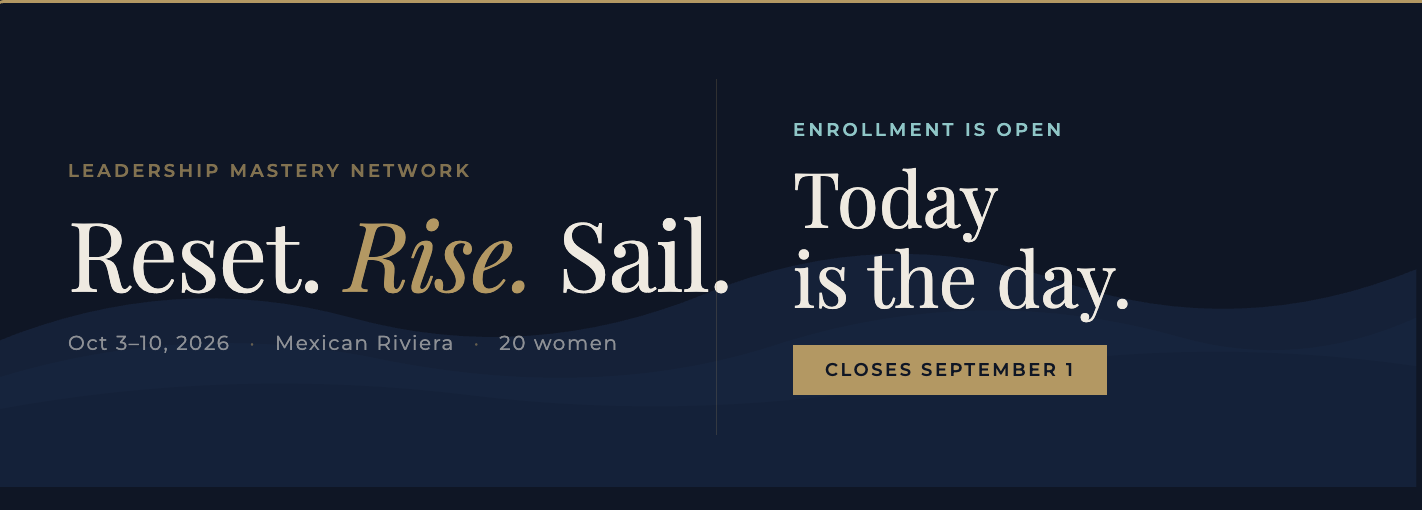
Reset. Rise. Sail. The Leader's Retreat 2026.
Seven nights aboard Virgin Voyages Brilliant Lady. Mexican Riviera. October 3 to 10. Twenty women maximum. Structured, intentional, and designed around one question: what would it look like to invest in yourself the way the best leaders invest in everything else they care about?
You leave with purpose and clarity that is genuinely yours. A 90-day plan that holds when life gets loud. A personal accountability tribe that becomes part of your board of directors. And daily habits built on the water that travel home with you.
Workshops. Morning movement and meditation. Group dinners. Shore excursions. The kind of honest conversation that only happens when you are in the middle of the ocean with nowhere to be except exactly where you are.
Enrollment closes on September 1, 2026.
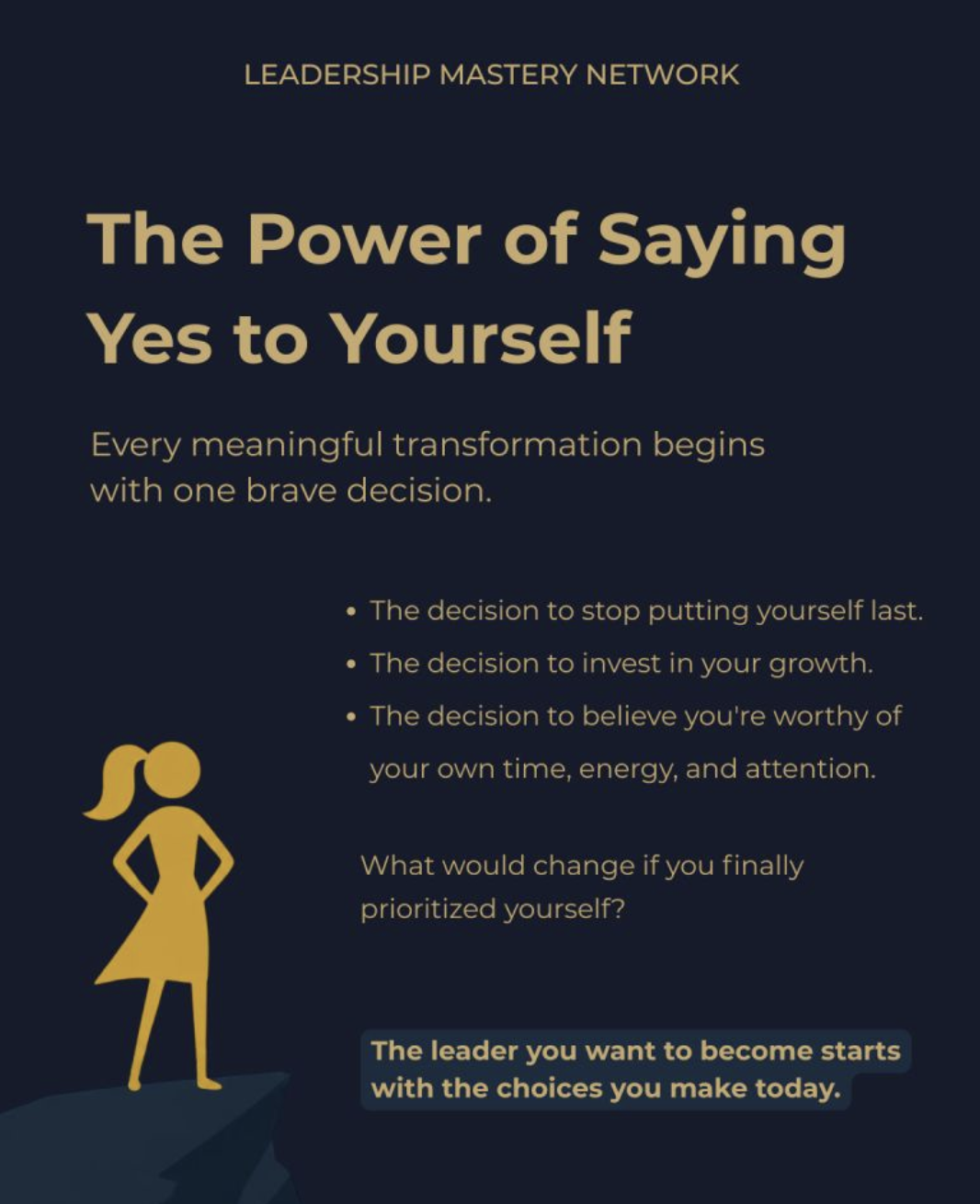
If something in you has been waiting for the right reason to say yes to yourself, this is it.
Join Now: leadershipmasterynetwork.com/retreat2026

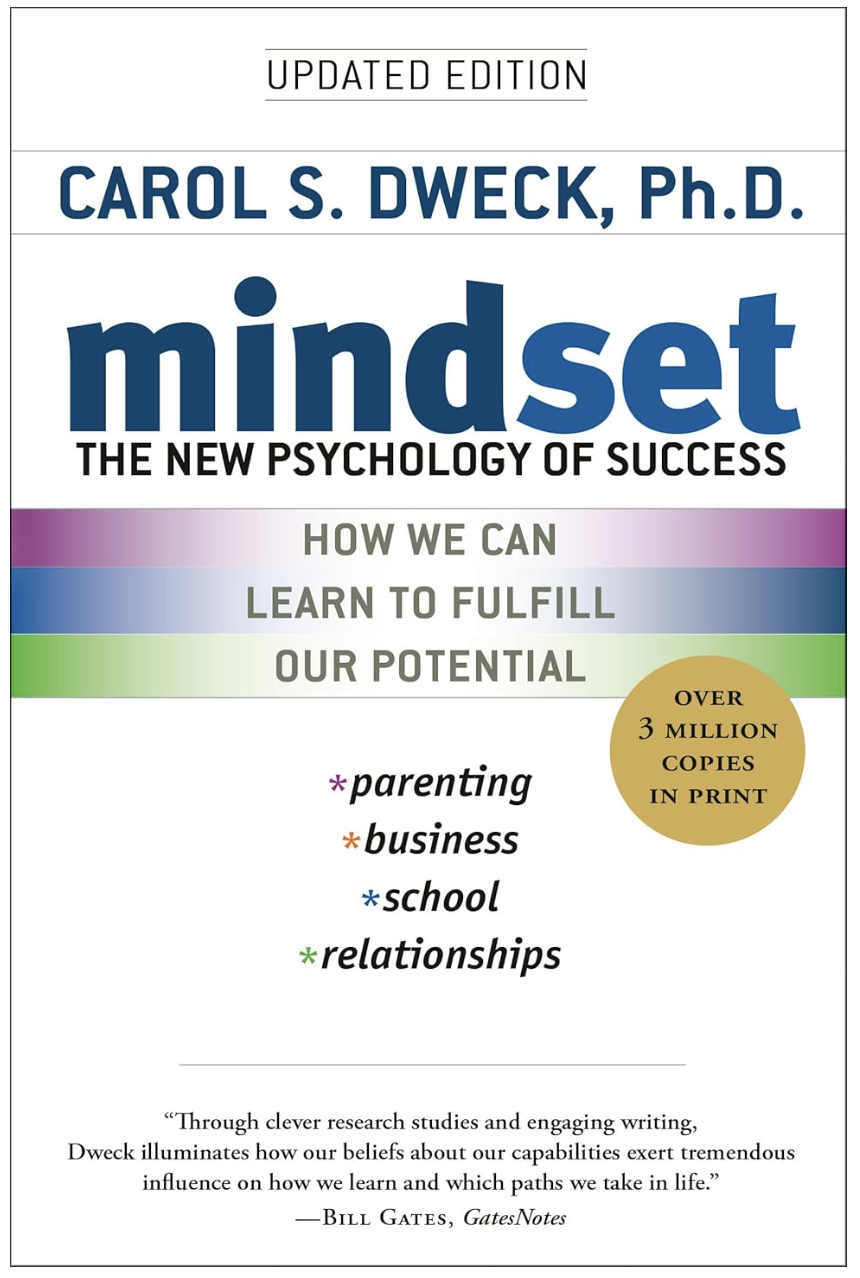
Mindset: The New Psychology of Success by Carol Dweck
If there is one book that sits at the foundation of everything this edition is about it is this one. Dweck's research on fixed versus growth mindset is not just about attitude. It is about the fundamental belief in whether you can change and grow, and how that belief shapes every decision you make about investing in yourself.
Leaders with a growth mindset seek challenges, welcome feedback, and keep developing long past the point where it would be easier to stop. This book will show you which one you are. And it will show you how to become the other.

Consider how many different pieces of content you see in any given week. See something that resonates with you? Share it with us to feature it in our Social Media of the Week section.
"Take rest. A field that has rested gives a bountiful crop."
Ovid