
Would they still follow you if you lost the title tomorrow?
Every leader has two kinds of respect available to them. Only one of them is worth building.
There is a moment every leader faces when they discover that a title and respect are not the same thing.
Most of us face it earlier than we expect.
You step into the role. The org chart changes. People call you by a new title and defer in meetings and do what you ask. And for a while that feels like leadership. Until you start to notice what is underneath it. The ideas that are not being shared. The honest feedback that never comes. The team that is managing you as much as you think you are managing them.
You have compliance. You do not have respect. And the gap between those two things is where most leadership either grows or quietly stalls.
This is the lesson most leadership programs skip entirely. Not because it is complicated but because it is uncomfortable. Because it requires a leader to ask a question that strips away all the scaffolding of authority and asks what is actually underneath.
If you did not have your title, would people still seek you out? Not because they had to. Because they wanted to.
That question is where this edition begins. And where the real work of leadership lives.
The two kinds of respect, and why confusing them is costly
There are two layers to respect, and the difference between them determines almost everything about the kind of leader you become.
The first layer: respect from position, skills, and expertise.
This is the respect you start with. It comes from your title, your track record, and what you have mastered. The moment you hold the role, a certain baseline of deference shows up automatically. People call you by your title, nod in meetings, and do what you say, at least on the surface.
This respect gets you in the room. It does not guarantee anyone will lean in when you speak.
And it is fragile in a specific way. It exists only as long as your authority does. The instant you lose the title, change companies, or the org chart shifts, that respect can evaporate overnight. Because it was never about you. It was about the role you occupied.
The second layer: respect earned through character, influence, and presence.
This is the respect you grow into. It has nothing to do with your resume. No one hands it to you when you accept the offer. You build it slowly, deliberately, and often invisibly through consistency, genuine care, and how you show up when the stakes are high and no one is watching.
This kind of respect does not need a title to survive. It follows you into the next room, the next company, the next chapter. Because it was never about the position. It was about who you are.
The most important leadership work is building the second layer. Most leaders spend their careers strengthening the first.
What positional respect costs you
It is worth naming plainly what is lost when a leader relies on the first layer alone.
It controls a room but does not change it. People will comply in your presence, but the moment you leave, so does your influence. It gets tasks completed but does not get people invested. People will execute instructions without believing in the mission or leading alongside you. It creates distance, not connection. People will not bring their best thinking or honest feedback to someone who leads with authority instead of trust. And it is fragile under pressure. In the moments that actually test leadership, positional respect tends to collapse first because it was never built on a foundation strong enough to hold weight.
None of this makes positional authority useless. Titles exist for good reasons. Accountability. Structure. Decision rights. But a title should be the starting point of leadership, never the substance of it. When leaders treat it as the destination rather than the departure point, they stop growing into the kind of leader people actually want to follow.
How deeper respect is actually built
The second layer of respect is not given. It is built deliberately and often slowly. Here is what we know from our own experience and from watching the leaders who do it best.
Listen before you lead. People want to be heard not because they waited to be asked, but because you genuinely made them feel that you wanted to hear their thoughts. This is one of the most underused leadership tools available. It costs nothing, and it changes everything.
Invest in people, not just performance. Respect requires seeing the whole person, their goals, their growth, their life outside of what they produce. When people know you are genuinely invested in them and not just what they can do for you, the relationship transforms.
Offer respect first and without condition. Respect that is only extended to people who have proven themselves is not respect. It is a transaction. Respect has to be a starting posture, not a reward for compliance.
Be consistent when no one is watching. Character is not what you display in the room where it counts. It is what you do in the rooms where it does not: the small decisions, the private conversations, the moments no one will ever know about but you. Consistency over time is what earns the kind of respect that lasts.
Choose trust over control. Trust is slow to build, but it is the only foundation durable enough to sustain relationships, build a team, and leave a legacy that outlasts your title.
The shift that changes everything
The version of leadership that relies on a title is unsustainable. And more importantly, it is often not the kind of leader most of us actually want to be.
The shift looks like this. Spending time with people and getting to know them not just as contributors but as human beings. Making space to listen more than you speak. Getting curious about frustrations, ideas, perspectives, and aspirations rather than only output and deliverables. Stop waiting to be shown respect and start offering it first, consistently and without condition.
It does not happen overnight, and it isn’t loud. There is no single dramatic turning point. Just a steady accumulation of small choices. Choosing to ask a question instead of giving an answer. Sitting with someone's frustration instead of rushing to fix it. Admitting when you do not know something instead of performing a certainty you do not feel.
Over time, something shifts. Not just in how people respond to you but in the kind of leader you are becoming. People start seeking you out not because they have to but because they want to. You become a sounding board, someone people can think out loud with without fear of judgment. A coach. In some cases, a role model. Someone people trust because of how you consistently showed up, supported, and invested in them.
That is what earned respect actually feels like. And once you have experienced it, the first layer never feels like enough again.
A question worth sitting with
Every leader has to confront this at some point.
If you did not have your title, would people still respect you?
Not would they be polite to you, or would they do what you asked. Would they genuinely seek you out for guidance, honesty, or partnership because of who you are and not because of what you are called?
That question is uncomfortable because it strips away the scaffolding and asks what's underneath. The honest answer can be humbling.
It is also the most important question a leader can ask. Because the answer points directly to the work that actually matters. Becoming the kind of person others choose to trust, follow, and grow alongside, regardless of what the org chart says.
Skills build credibility. Presence builds influence. Influence earns respect that lasts.
The transformation is not about acquiring a new skill or checking off a competency list. It is a fundamental shift in posture, from demanding to earning, from controlling to connecting, from being obeyed to being genuinely followed.
That shift is available to every leader. At every level. Starting today.
“People will forget what you said, people will forget what you did, but people will never forget how you made them feel.”

Resources to Dive Deeper
True North — Bill George: George's framework for authentic leadership built on values and character is the most complete guide available for leaders who want to build the second layer of respect deliberately and over time.
The Speed of Trust — Stephen M R Covey: Covey's research on how trust functions as a measurable business asset makes the clearest case available for why character-based leadership is not just the right thing but the strategically smart thing.
The Diary of a CEO — Steven Bartlett: Bartlett's long-form conversations with leaders consistently surface the human side of trust, influence, and what it actually takes to lead in a way that people choose to follow.
What Makes a Leader — Harvard Business Review: Daniel Goleman's landmark piece on emotional intelligence and what actually distinguishes the leaders people want to follow from the ones they simply tolerate.
The Leadership Mastermind is opening its doors again THIS WEEK!
This is not a course.
Not a webinar series.
Not another program you sit in the back of and forget by the following Monday.
It is a small, curated group of leaders doing serious work together. Honest conversation. Real accountability. Weekly live sessions with two executive coaches built in.
A room where the question this edition ends with, would people still respect me without the title, is not just something you ask once and file away. It is something you actively build toward with people who are doing the same.
If this edition resonated with you, this is the room we want you in.
The waitlist is open now. Spots are intentionally limited.


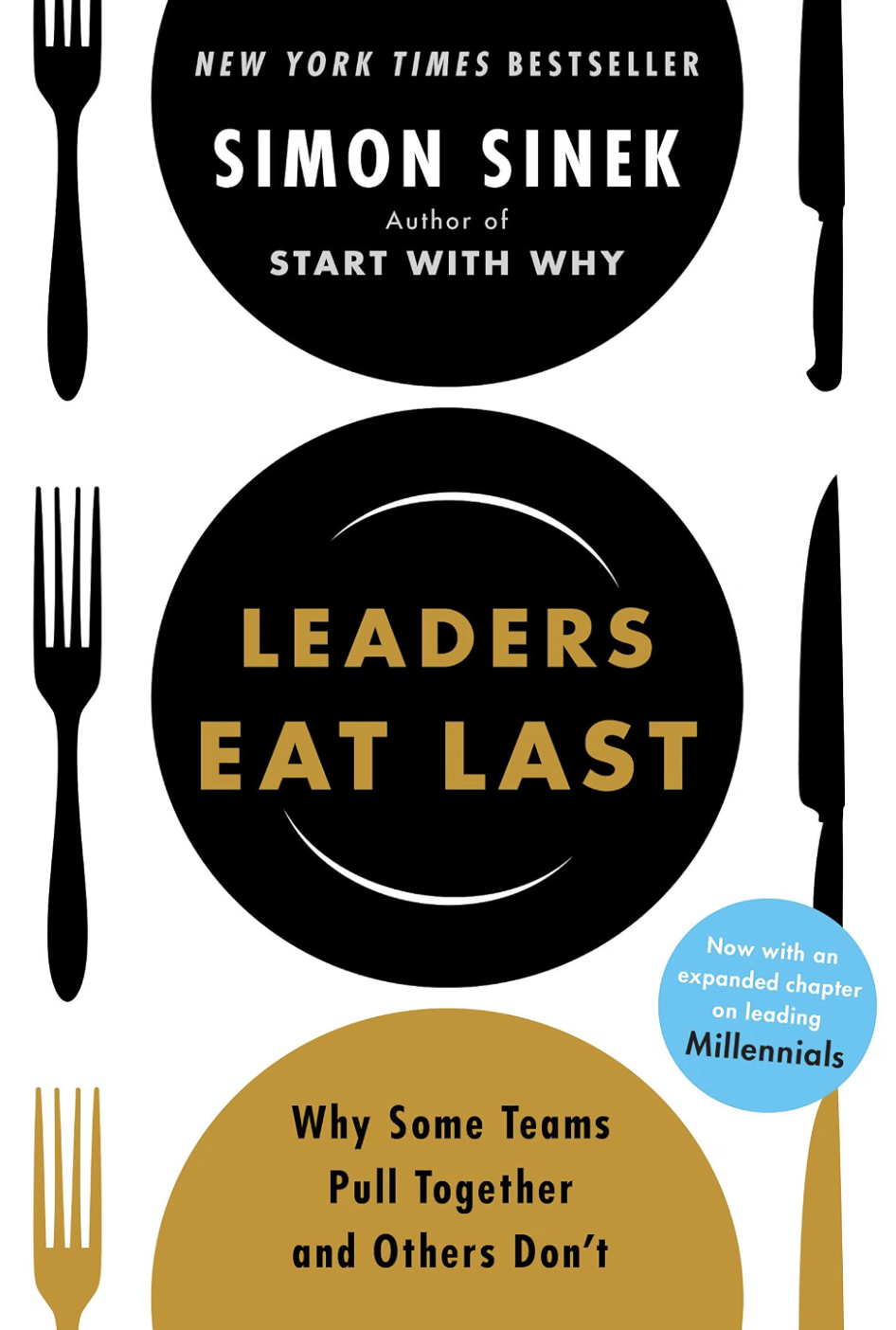
Leaders Eat Last by Simon Sinek
This book lives at the heart of everything this edition is about.
Sinek's research on what builds trust, loyalty, and followership is one of the most honest and compelling explorations of why some leaders earn lasting respect while others never quite do. He draws on neuroscience, military culture, and real organizational stories to argue that the leaders who build the strongest teams are not the ones who demand the most from their people.
They are the ones who protect them first. The distinction between a leader people follow because they have to and one they follow because they choose to is on every page. Read it slowly. There is a lot worth sitting with.

Consider how many different pieces of content you see in any given week. See something that resonates with you? Share it with us to feature it in our Social Media of the Week section.
"Earn your leadership every day."
Michael Jordan